

AI for independent hotels is most useful when it reduces the work of finding, summarizing and drafting information. Start with a daily brief, a review-response draft or a routine guest question. Give each task an approved information source and a person responsible for checking the result before widening its use.
A hotel does not need to hand over its front desk to benefit. It needs to identify the repetitive work that interrupts reception, housekeeping and the manager. An assistant can prepare a useful starting point, but missing information, stale data and an unclear instruction can still produce a confident wrong answer.
Which hotel tasks are suitable for an AI pilot?
Choose a task that happens often, has a recognizable good answer and can be checked without recreating the whole job. Summarizing overnight notes may be a better first project than automatically changing rates. Drafting a standard arrival message is easier to supervise than resolving an emotional complaint.
- Morning preparation: summarize the information the team has supplied, highlight open questions and identify items needing attention.
- Review replies: produce an initial response that staff can compare with the review and the hotel’s approved tone.
- Routine messages: draft answers using current check-in hours, directions and other verified property information.
- Market context: organize available rate or demand information for a manager to assess.
The morning brief routine gives a pilot a clear destination: one short read before the shift starts. Keep unknowns visible. “Arrival time not confirmed” is more useful than an invented time, and a question that needs checking should remain a question.
Define the boundary before connecting the data
Write down what the assistant may read, what it may draft and what it may change. These are different permissions. Access to a reservation does not automatically justify sharing it in a message, and the ability to suggest a room rate does not mean it should publish that rate.
Keep exceptions with the team. Disputed charges, safety concerns, complaints involving sensitive circumstances and promises outside policy need human judgment. Use an escalation owner and a backup, rather than a vague instruction to contact management. Staff must also be able to continue the task when the tool is unavailable.
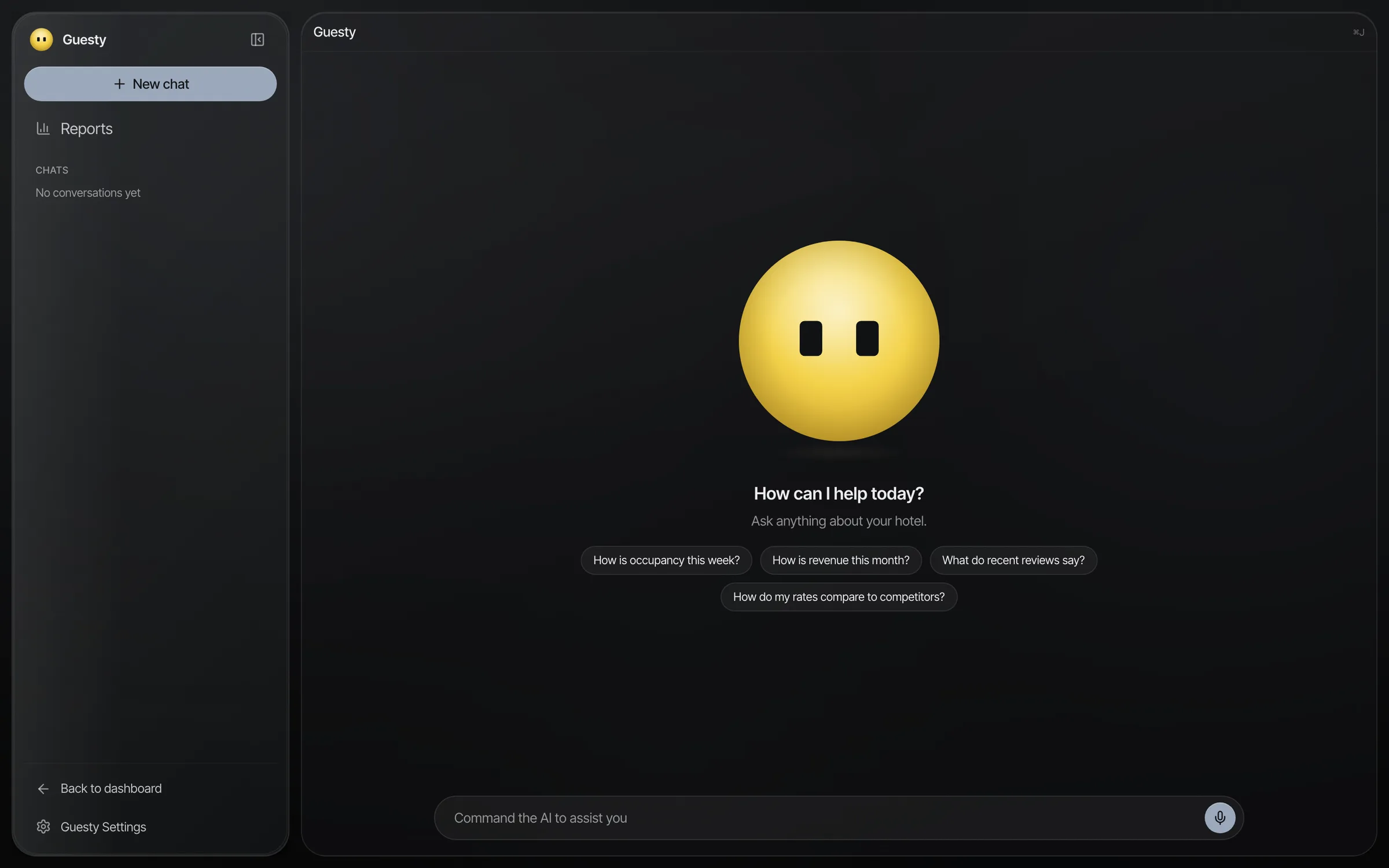
A practical prompt for a daily brief
Try this structure with information your hotel is authorized to use: “Prepare a short brief from the attached shift notes. Separate confirmed facts, open questions and actions. For each action, name the responsible role if the notes identify one; otherwise say owner needed. Do not invent room status, arrival times or decisions. Flag contradictory notes.”
Then compare the output with its source. Did it omit an urgent problem? Did it combine two guests or turn a suggestion into a commitment? Did it repeat a detail that the intended reader did not need? Keep these observations in a simple review log so a convincing demo does not substitute for evidence.
Run a small, measurable trial
A two-week trial is a practical starting point, not a guaranteed time to value. Use the same task and similar workload before and during the trial. Measure the complete workflow, including correction and checking, rather than only the time the assistant spends generating text.
- Select one workflow and a named owner.
- Record the time currently spent completing and checking it.
- Approve the source material and remove unnecessary personal data.
- Review outputs before sending messages or changing records.
- Track corrections, missed issues and total staff time.
- Keep, revise or stop the trial based on the results.
When testing messages, use the review response checklist to judge specificity and tone. For personal information, apply the guest data privacy checklist before adding another tool to the workflow. Do not use real guest records merely to see whether a chatbot can answer an interesting question.
What to ask during a Guester demo
Guester presents reviews, rates, guest information and daily operations in a shared workspace with Guester AI. Ask to see how the workflow would fit your property, which information is available through your intended integrations and where staff review the output. A product name or an integration logo cannot answer those questions for your hotel.
Bring one routine task and one awkward exception to a Guester demo. The useful test is whether the team can understand the answer, correct it and continue working. Expand only when the first task saves time without leaving someone else to discover the mistakes.