

To respond to hotel reviews, acknowledge the guest’s specific experience, check the facts, explain any action you have actually taken and give unresolved concerns a private route back to the hotel. A short, personal answer usually serves the reader better than a polished paragraph that could belong to any property.
The reply has two audiences: the person who stayed and the person considering a booking. Both need to see that somebody has read the detail. You are building a public record of how your hotel handles praise, inconvenience and mistakes. Treat that record as part of the daily operation.
Start with the issue, then write the reply
Before typing, read the complete review and check relevant notes with the team. A complaint about a cold room may describe an unresolved fault, a problem already repaired or a mismatch between the guest’s expectations and the room they booked. Those situations need different answers. Never invent a repair to make a reply sound reassuring.
Separate a public response from service recovery. A refund decision, a payment dispute or details of someone’s stay belong in a private conversation. If a guest is still in the building, contact the responsible manager first. Publishing a response does not close the operational task.
Three hotel review response templates
Use these examples as starting points. Replace the bracketed details only after checking them, and change the wording to sound like the person signing it.
- Positive review: “Thank you, [first name]. We are pleased you enjoyed [specific detail]. I will share your comments with [relevant team]. We hope to welcome you again. [Name, role].”
- Mixed review: “Thank you for mentioning [positive detail] and for explaining the difficulty with [issue]. We are sorry that part of the stay fell short. [Verified action or next step]. Thank you for helping us understand the experience. [Name, role].”
- Unresolved complaint: “I am sorry to read about [issue]. I would like to check what happened and discuss the next step with you. Please contact [hotel email or phone] and ask for [name or role]. [Name, role].”
A template is useful when it gives a tired colleague a structure. It becomes unhelpful when it replaces reading. Delete unnecessary apologies from a positive reply, avoid repeating the complaint in dramatic language, and never promise an upgrade or refund that has not been approved.
Keep the public reply useful and private
Do not publish room numbers, travel dates, payment details or information about companions. Even if the guest has shared part of the story, that does not make the rest of the reservation public. The same discipline applies when an AI tool prepares the first draft.
Google recommends concise, relevant, professional replies and a private conversation for complex concerns. It also prohibits incentives in exchange for posting, changing or removing reviews. Use its official review guidance when training the team, and check each platform’s rules before requesting feedback. A review you disagree with is not automatically a policy violation.
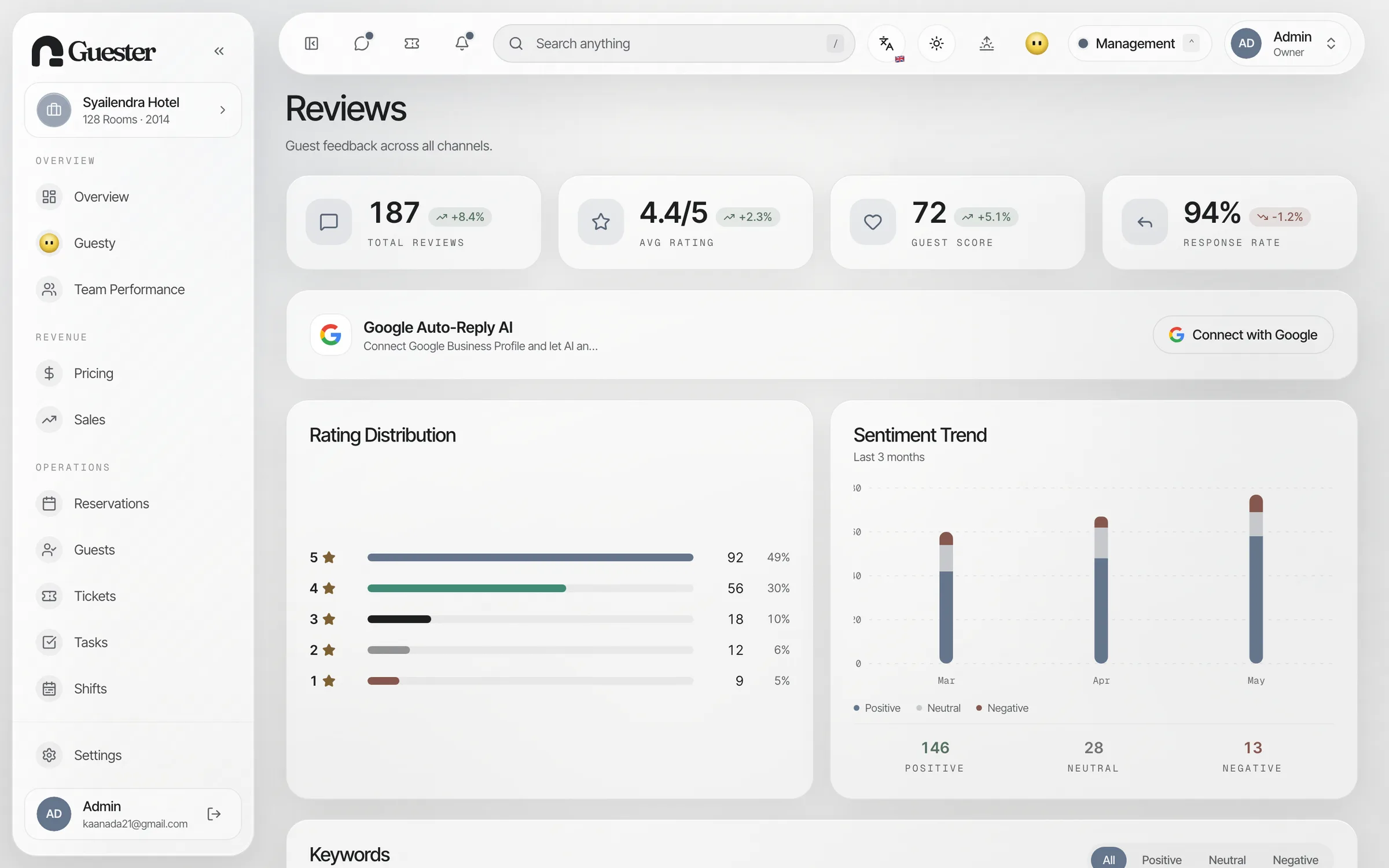
A review routine the team can maintain
Choose a daily review window and appoint a deputy for days off. Include unresolved issues in the hotel morning brief so the reply and the repair stay connected. Prioritize time-sensitive complaints, then work through the remaining feedback without leaving quieter reviews permanently unattended.
- Collect new feedback from the channels your hotel actually uses.
- Assign one owner to each concern that needs investigation.
- Draft a specific response and check names, facts and promises.
- Escalate sensitive or disputed matters before publishing.
- Record the repair or service change separately and check that it happened.
Review the routine weekly. Count unanswered reviews, the age of the oldest open item and repeated themes such as noise or check-in delays. These measures help you find gaps in the process. A faster reply is useful, but a fast reply to a recurring fault does not solve the fault.
Let the feedback improve the stay
Patterns in reviews can guide practical changes to the arrival experience and the information sent before a stay. Guester brings review management and AI-assisted response drafting into the hotel workspace; your team still checks the facts and decides what to publish. Start with a dependable routine, then use software to make that routine easier to maintain.