

A reliable hotel housekeeping workflow connects the arrivals list to cleaning priorities, room checks and the front desk. Each room needs a visible status, each task needs an owner and reception needs a clear signal before assigning a room. In an independent hotel, this structure can replace repeated calls and instructions held in one person’s memory.
Define when a room is ready
The vocabulary can vary between systems, but the meaning must stay consistent across departments. A practical sequence is dirty, in progress, awaiting release check and ready. Keep an out-of-service flag separate so a cleaned room with a serious fault cannot accidentally return to available inventory.
- Dirty: the room needs the agreed departure or stayover service.
- In progress: an assigned attendant has started the work.
- Awaiting release check: cleaning is complete, but the hotel’s required readiness checks remain.
- Ready: an authorized team member has confirmed the room meets the hotel’s release standard and updated reception.
Decide who can change each status and what happens when a fault is found. If a room marked ready develops a problem, the status must change again and reception must be told. A shared board helps only when it reflects the room as it is now.
Sequence work around arrivals
Room-number order is convenient on a corridor and often wrong for the day’s demand. Start with departure rooms needed for confirmed early arrivals, while respecting occupied rooms, agreed service times and late check-outs. Recheck priorities when arrival information changes rather than asking an attendant to guess which interruption matters most.
Consider this illustrative morning: rooms 4 and 9 have departed; room 4 has a confirmed early arrival; room 12 has a late check-out; room 7 has a reported leak. Room 4 is the first turnover, room 9 follows, room 12 stays out of the early sequence and room 7 goes to maintenance assessment. A guest requesting early access receives a confirmed answer only after the relevant room is ready.
Check the workload against the staff schedule. Departure cleans, stayovers, laundry movement and public areas require different amounts of work. A sensible priority list cannot compensate for an impossible workload or missing linen.
Use a release checklist for every room
- Confirm the correct service was completed and the room is free of obvious safety or maintenance concerns.
- Check the bathroom, bed linen, floors and frequently touched surfaces against the hotel’s cleaning standard.
- Verify essential equipment, lighting and locks using the property’s approved procedure.
- Replace agreed supplies and remove cleaning materials or maintenance equipment.
- Record unresolved issues, complete the required sign-off and update the room’s status before reception assigns it.
Every room needs its required release checks. A deeper quality audit can then examine a rotating sample, with additional support for new staff, repeated faults or rooms linked to a complaint. Sampling that deeper audit does not mean skipping basic readiness checks. The distinction prevents the common contradiction of requiring an inspected room while leaving nobody responsible for inspection.
The manager’s contribution is a sequence that makes sense and faults that actually get fixed.
Turn a noticed fault into an owned task
A dripping tap mentioned in a stairwell can vanish between shifts. Record the room, the specific fault, its effect on availability, the assigned person and the next review time. “Bathroom issue” is weak; “room 7 shower drain backing up, room held from assignment until checked” gives the next person something useful to act on.
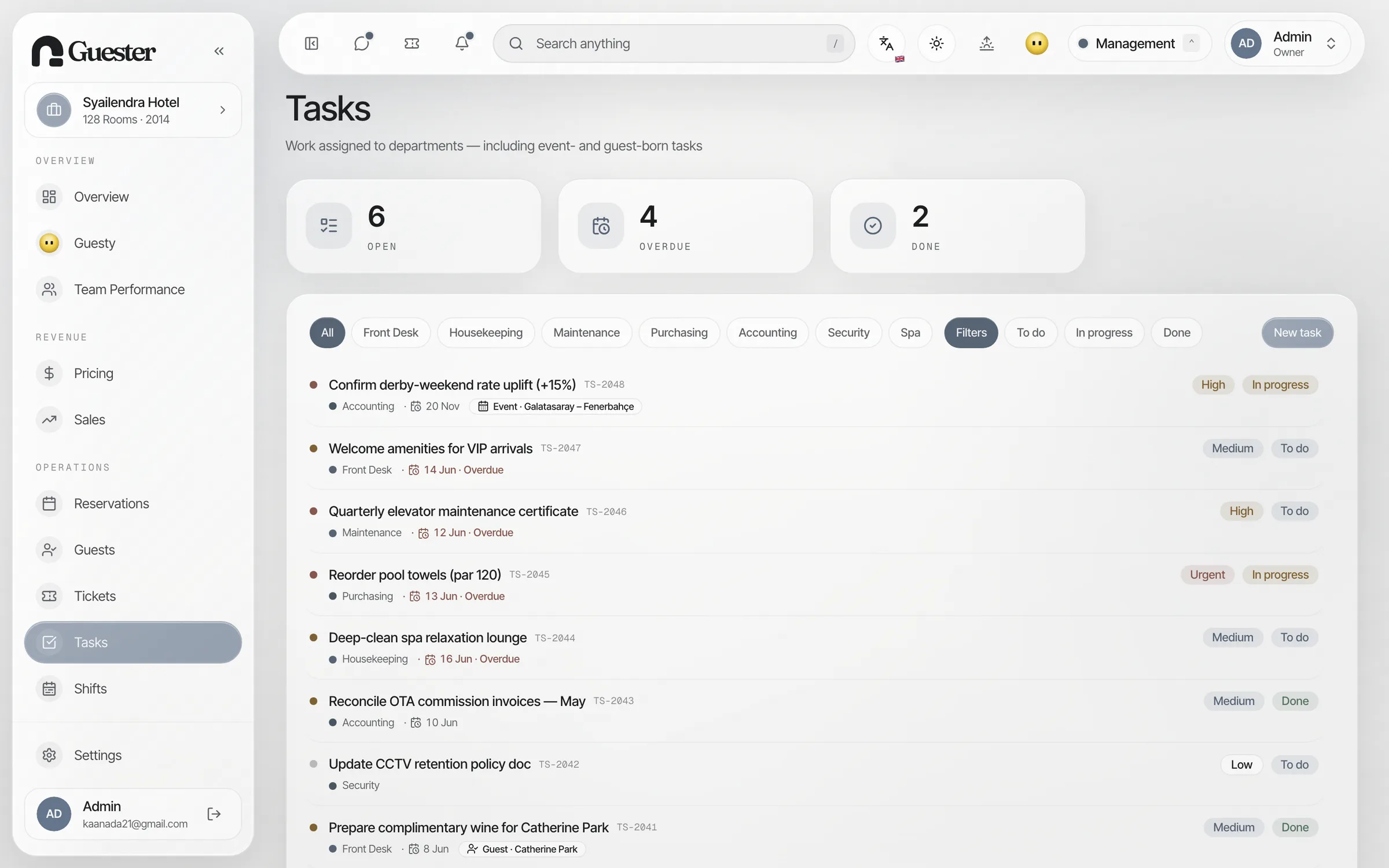
A maintenance task is not closed simply because someone visited the room. The agreed repair and any required recheck must be complete, and the person managing room availability must receive the result. Keep guest requests within the same discipline without exposing unnecessary personal information to everyone using the board.
Close the loop with reception
The last handoff becomes part of the guest arrival experience. Reception should see whether the assigned room is ready before promising access. If it is delayed, give a realistic update, a named contact and a plan for luggage or waiting; do not send the guest upstairs to discover the problem.
Review a few exceptions at the end of the week: rooms released late, faults reopened and changes reception did not receive. Ask what in the process failed before assuming someone worked too slowly. Repeated shortages, unclear authority and broken equipment need management decisions.
The existing Guester product overview includes a task-board view. Use a demo to check how your room-status and maintenance handoffs fit the workspace, including who can update and complete work. The software should support a standard the hotel has already made clear.